Grandparents' Guide to Supporting a New Mom's Mental Health
---
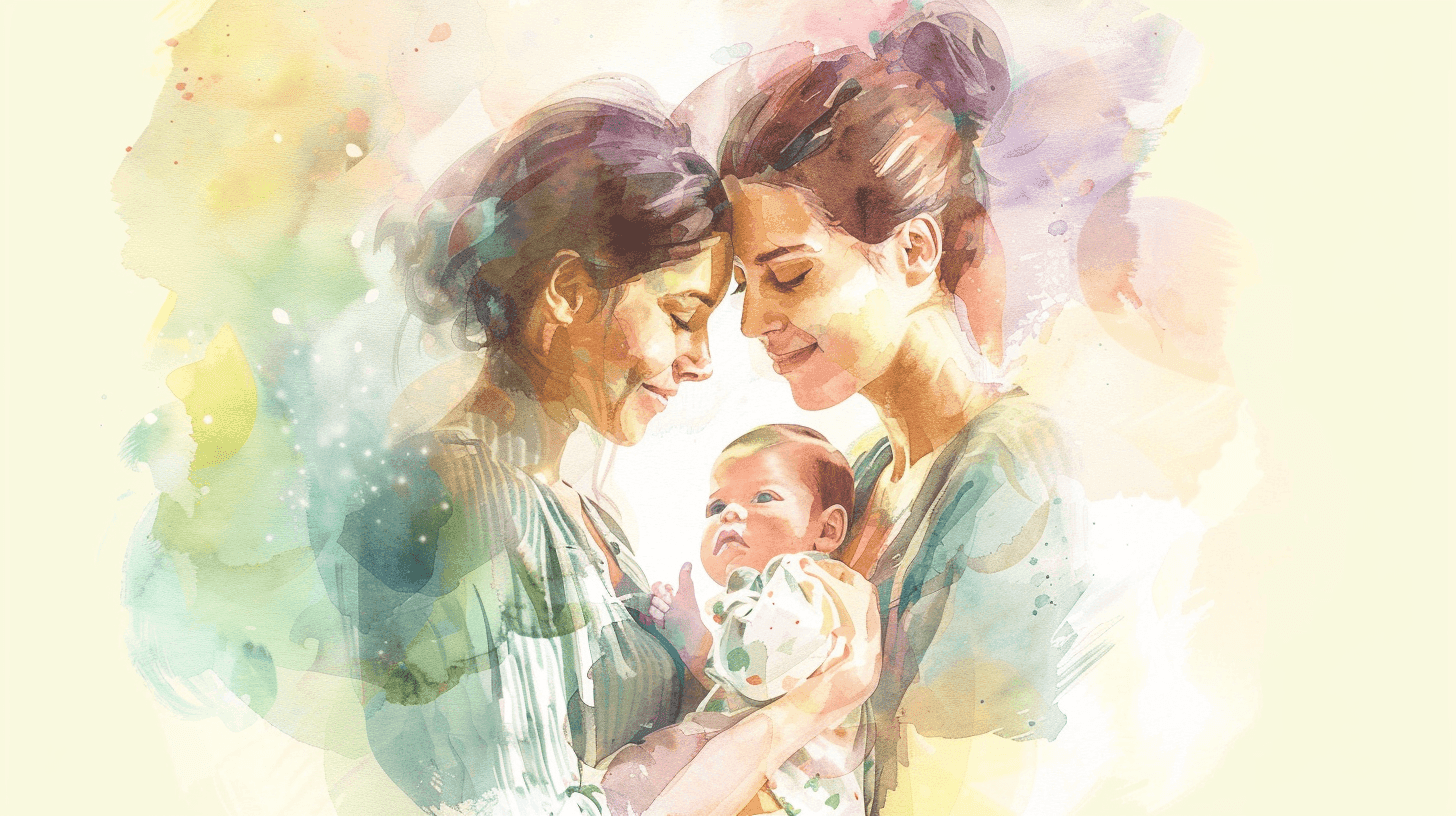
Your daughter (or daughter-in-law) just had a baby, and something feels off.
She's not glowing the way you remember feeling, or the way you thought new mothers should look. She's tearful, withdrawn, or snapping at everyone. She's not taking care of herself. She seems to be struggling with the baby in ways that don't seem normal.
You want to help, but you're not sure how.
When you offer advice from your experience, she shuts down or gets defensive. When you suggest she "just needs sleep," she cries harder. You're worried, confused, and maybe even a little hurt that she's pushing you away when you're trying to help.
> Here's what you need to know: Your daughter might have postpartum depression or anxiety, and the way you respond in the next weeks and months can make a profound difference in her recovery.
This guide will help you recognize the signs, understand what she's experiencing, and provide the kind of support that actually helps.
---
Understanding Postpartum Depression and Anxiety
First, let's clear up some basics. Postpartum mood and anxiety disorders are medical conditions, not character flaws, weakness, or lack of gratitude.
What They Are
Postpartum Depression (PPD): Persistent sadness, hopelessness, loss of interest in activities, difficulty bonding with baby, feelings of worthlessness, and sometimes thoughts of self-harm.
Postpartum Anxiety (PPA): Constant worry, racing thoughts, panic attacks, intrusive thoughts about harm, hypervigilance, and physical symptoms like heart racing and nausea.
Postpartum OCD: Unwanted, intrusive thoughts about harm (to baby or self), followed by compulsive behaviors to reduce anxiety (excessive checking, cleaning, avoidance).
How Common They Are
PPD affects 1 in 7 mothers (some studies say 1 in 5)
PPA affects 10-15% of new mothers
These aren't rare; they're incredibly common
This Isn't the "Baby Blues"
You might remember the "baby blues," a few days of moodiness and tears that resolved on their own. That's different from PPD/PPA.
Start 2-5 days postpartum
Peak around day 5
Resolve within 2 weeks
Include crying, mood swings, feeling overwhelmed
Baby blues:
Can start anytime in the first year (often weeks 2-4)
Don't improve on their own
Last weeks or months without treatment
Significantly impair functioning
Require professional treatment
PPD/PPA:
> If your daughter's struggles have lasted more than two weeks, it's likely PPD/PPA, not baby blues.
---
Recognizing the Signs ⚠️
Your daughter might not tell you directly that she's struggling. Watch for these signs:
Emotional Signs
Crying frequently or uncontrollably
Expressing feelings of hopelessness ("I can't do this," "I'm a terrible mother")
Excessive guilt or shame
Irritability or anger (especially if she was previously even-tempered)
Flat affect (no emotion, seeming numb or disconnected)
Expressing thoughts of harming herself or the baby
Behavioral Signs
Withdrawing from family and friends
Not caring for herself (not showering, eating, sleeping even when possible)
Obsessively worrying about the baby
Difficulty making simple decisions
Avoiding the baby or seeming disconnected
Difficulty bonding (no eye contact, mechanical caregiving)
Physical Signs
Significant weight loss or gain
Insomnia (can't sleep even when baby sleeps)
Physical agitation or moving very slowly
Appearing exhausted beyond normal new-parent tiredness
What She Might Say
"I'm not cut out for this"
"The baby would be better off without me"
"I feel nothing when I look at the baby"
"I can't stop these terrifying thoughts"
"I'm afraid to be alone with the baby"
"Everyone else can do this. What's wrong with me?"
> If you're seeing multiple signs, it's time to take action.
---
What NOT to Say (Even Though You Mean Well)
Before we get to what helps, let's address what doesn't. These comments, while well-intentioned, can make things worse:
❌ "Motherhood is hard for everyone."
Why it's harmful: It minimizes her experience. PPD/PPA aren't just "hard"; they're medical conditions requiring treatment.
Better alternative: "This sounds like more than just normal new parent struggles. I'm worried about you."
❌ "You should be happy, you have a healthy baby!"
Why it's harmful: It implies she's choosing to feel this way or that she's ungrateful. She can't just "choose" happiness with a brain chemistry imbalance.
Better alternative: "I know you love your baby. And I also know you're really struggling. Both can be true."
❌ "It'll pass. You just need sleep."
Why it's harmful: PPD doesn't resolve with sleep alone. This dismisses the seriousness of what she's experiencing.
Better alternative: "Sleep deprivation is definitely making this harder, but this sounds like something that might need professional help."
❌ "I never had problems after having babies."
Why it's harmful: It implies she's weak or doing something wrong. Everyone's biology, circumstances, and mental health history are different.
Better alternative: "I'm glad I didn't experience this, but I know it's very real for many women. How can I support you?"
❌ "Maybe you're just not meant to breastfeed/work/stay home."
Why it's harmful: It suggests her choices caused the PPD, which isn't true. PPD is caused by hormonal, genetic, and environmental factors.
Better alternative: "Let's talk about what might help you feel better, whether that's changing your routine or getting professional support."
❌ "You're being too hard on yourself."
Why it's harmful: Self-criticism is a symptom of PPD, not a choice. Telling her to stop doesn't help her stop.
Better alternative: "I can see you're really beating yourself up. That must be exhausting. You don't deserve to feel this way."
❌ "I raised [number] kids without all this help/medication/therapy."
Why it's harmful: Times have changed. Women today have less support, different stressors, and thankfully, better treatment options. Implying she should do it the "old way" is dismissive.
Better alternative: "I'm grateful that there are treatments available now that can help you feel better."
---
What TO Say and Do Instead
Here's how to provide meaningful support:
1. Validate Her Experience
"This sounds really hard."
"You're not a bad mother for feeling this way."
"It makes sense that you're struggling; you're dealing with a lot."
"I believe you when you say this is overwhelming."
Say:
Why it works: Validation helps her feel less alone and less ashamed.
2. Express Concern Without Judgment
"I've noticed you seem to be having a really tough time. I'm worried about you."
"You don't seem like yourself lately. Are you okay?"
"I love you, and I want to make sure you're getting the support you need."
Say:
Why it works: It shows you care without criticizing or minimizing.
3. Offer Specific, Concrete Help
Instead of "Let me know if you need anything" (which puts the burden on her to ask), offer specific help:
"I'm coming over Tuesday at 2 PM to do your laundry and clean the kitchen. You don't need to do anything."
"I'm picking up groceries. Text me a list or I'll just get basics."
"Can I take the baby for three hours on Saturday so you can nap?"
"I'm ordering you dinner for the next week. What nights work best for delivery?"
Say:
Why it works: Specific offers are easier to accept than vague "let me know."
4. Encourage Professional Help (Gently)
"Have you talked to your doctor about how you're feeling? There are treatments that really help."
"A friend of mine had postpartum depression and seeing a therapist made a huge difference. Would you be open to that?"
"I did some reading about postpartum depression, and what you're describing sounds like the symptoms. Can I help you find someone to talk to?"
Say:
Why it works: It normalizes seeking help and offers practical support in accessing it.
5. Don't Take Pushback Personally
If she snaps at you or rejects help, remember: It's the depression/anxiety talking, not her true feelings about you.
"I understand you might not want help right now. But I'm here when you're ready."
"I know I might be annoying, but I care about you and I'm not going anywhere."
Say:
Why it works: It maintains connection without pressure.
---
The Generational Gap: Why Your Experience May Not Apply
You might be thinking, "But I raised kids and never had this." That's valid, but here's why today's mothers face different challenges:
Mothers Today Have Less Support
Extended family nearby or in the same household
Stay-at-home motherhood as the norm (with community and daytime support)
Less pressure to "bounce back" immediately
Your generation often had:
Isolated nuclear families far from extended family
Pressure to work shortly after birth
No village, no daily drop-in visitors, no generational help living nearby
Today's mothers often have:
Cultural Expectations Have Changed
Less social media comparison
Lower expectations for "perfect" parenting
Less information overload about every parenting decision
Your generation:
Constant comparison via Instagram/Facebook
Overwhelming information and conflicting advice
Pressure to excel at parenting, career, appearance, everything
Today:
There's More Awareness Now
It's possible you or someone you knew had PPD but it wasn't recognized or discussed. Mental health wasn't talked about openly. Women suffered in silence.
PPD is a medical condition, not weakness
Treatment (therapy, medication) is available and effective
Talking about it reduces stigma and suffering
Now we know:
> Your daughter isn't weak for struggling. She's actually strong for recognizing she needs help.
---
Practical Ways to Help 🤝
Help with the Baby
Hold the baby while she showers, naps, or just has a moment alone
Take the baby for a walk so she can rest
Do nighttime or early morning shifts (if bottle-feeding or pumping)
Come over regularly so she has predictable breaks
Offer to:
Criticize how she's caring for the baby
Take over without asking (she might feel she's failing)
Wake the baby to hold them when they finally fall asleep
Don't:
Help with Household Tasks
Dishes, laundry, tidying without being asked
Grocery shopping or meal prep
Running errands (post office, pharmacy, returns)
Organizing baby gear or chaos
Do:
Reorganize her home the way you'd like it
Comment on the state of her house
Make her feel judged for the mess
Don't:
Help Her Care for Herself
Bring nutritious, easy-to-eat food (protein bars, smoothies, pre-made meals)
Encourage her to shower while you watch the baby
Offer to schedule doctor/therapy appointments for her
Create opportunities for her to sleep
Do:
Comment on her appearance
Suggest she "needs to take better care of herself" (she knows, and feels guilty)
Push activities she's not ready for
Don't:
Help with Emotional Support
Listen without judgment
Sit with her while she cries
Normalize her feelings ("This is so hard, and you're not alone")
Check in regularly (text, call, visit)
Do:
Tell her how to fix it
Share your own parenting stories unless she asks
Make it about you ("I'm so worried about you" can add to her guilt)
Don't:
---
When to Insist on Professional Help 🤝
Sometimes gentle encouragement isn't enough. If you see these signs, it's time to be more direct:
🚨 Emergency Situations (Call 911 or take her to ER)
Suicidal thoughts or plans
Thoughts of harming the baby
Hallucinations or delusions
Complete inability to function
⚠️ Urgent Situations (Insist on same-day/next-day care)
Severe insomnia for multiple days
Refusing to eat or drink
Extreme agitation or panic
Detachment from reality
📋 High-Priority Situations (Schedule appointment ASAP)
Symptoms lasting more than 2 weeks
Can't care for herself or baby
Withdrawing from everyone
Expressing hopelessness
How to insist:
> *"I love you, and I'm really worried. This isn't something you have to just power through. I'm calling your doctor today to make an appointment. You don't have to want to go; I just need you to show up."*
If she refuses:
Call her doctor yourself and express concern. Call her partner. Don't let her suffer alone out of respect for her autonomy; this is a crisis.
---
Supporting Without Overstepping 🤝
It's a delicate balance: being helpful without being overbearing.
Respect Boundaries
Ask before visiting
Leave when she needs space
Accept "no" without guilt-tripping
Let her parent her way (even if you'd do it differently)
Do:
Show up unannounced repeatedly
Stay too long when she's clearly exhausted
Criticize her parenting choices
Undermine her partner's support
Don't:
Support Her Partner Too
Remember, her partner is also struggling. They're watching someone they love suffer and often don't know how to help.
Check in with them separately
Offer them support too
Validate that this is hard for the whole family
Help them access couples therapy if needed
Do:
Know When to Step Back
She's more stressed after your visits
You're arguing frequently
She's shutting you out completely
If you're making things worse (even unintentionally):
Taking a brief step back
Sending support from a distance (food delivery, text check-ins)
Letting others (friends, partner, professionals) be primary support
Working with a therapist to navigate the relationship
Consider:
---
Cultural and Generational Healing
If you didn't have great support as a new mother, this is your chance to break the cycle.
If Your Own Postpartum Experience Was Hard
Maybe you struggled too but didn't have language for it or access to help. Seeing your daughter struggle might bring up old pain.
Give her what you needed but didn't have
Acknowledge that you wish someone had supported you this way
Model that it's okay to ask for help
This is an opportunity to:
If You Have Regrets About Your Parenting
Maybe you're watching her parent differently than you did, or maybe you're realizing you might have had PPD yourself.
Make this about your guilt
Defend your past choices
Criticize her different approaches
Resist the urge to:
Focus on supporting her now
Process your own feelings separately (with a therapist or friends)
Recognize that different doesn't mean wrong
Instead:
---
A Message for Worried Grandparents
You're reading this because you love your daughter and you're worried. That love and concern are powerful gifts.
Your daughter needs you, but maybe not in the ways you expect. She doesn't need you to fix it, to have all the answers, or to parent the way you did. She needs you to see her, validate her struggle, provide concrete help, and support her getting professional treatment.
This isn't about you doing something wrong in how you raised her. This isn't about her being weak or ungrateful. This is about biology, brain chemistry, and circumstance colliding in a way that's created a medical condition.
The best thing you can do is educate yourself (like you're doing right now), show up with compassion, and help her access the treatment she needs.
> She will get better. And your support during this dark time will be something she remembers for the rest of her life.
---
Resources 📚
Postpartum Support International: postpartum.net
Books: "This Isn't What I Expected" by Kleiman & Raskin, "Good Moms Have Scary Thoughts" by Karen Kleiman
For Learning About PPD/PPA:
Postpartum Support International Provider Directory: postpartum.net
National Maternal Mental Health Hotline: 1-833-TLC-MAMA (1-833-852-6262)
For Finding Treatment:
National Suicide Prevention Lifeline: 988
Postpartum Support International Crisis Line: 1-800-944-4773
For Emergencies:
Bloom Psychology We specialize in postpartum depression and anxiety treatment. Dr. Jana Rundle is an experienced postpartum depression therapist in Austin who works with mothers and provides guidance to concerned family members.
Individual therapy for postpartum depression and anxiety
Family sessions to educate loved ones
Help coordinating care
Virtual therapy across Texas
In-person sessions in North Austin
Services include:
Schedule a free 15-minute consultation here.
We're here to help your daughter, and to support you in supporting her.
---
Final Thoughts
Being a grandparent means watching your child become a parent themselves. When that transition is marked by suffering, it's natural to feel helpless and scared.
But you're not helpless. Your presence, your practical support, your validation, and your encouragement of treatment can make a profound difference.
You don't have to understand everything she's experiencing. You don't have to have gone through it yourself. You just have to show up with love, patience, and the willingness to help in the ways she actually needs.
> Thank you for caring enough to educate yourself. Your daughter is lucky to have you.
---
*Dr. Jana Rundle is a clinical psychologist specializing in maternal mental health. She frequently works with families navigating postpartum mental health challenges and believes that intergenerational support, when done with compassion and education, is a powerful component of healing.*
Related Reading
- Does Your Child Reflexively Say "No"?
- Postpartum Depression in Dads and Non-Birthing Partners: Yes, It's Real
- Real-Life Self-Care for Real Parents
If you're watching your daughter or daughter-in-law struggle and feeling helpless about how to reach her, that worry comes from love—and your steady presence matters more than perfect words. You don't have to fix this; you have to stay close and help her get real support. Sometimes the most powerful thing you can offer is a gentle path to care. You can share information about therapy for postpartum depression with her, or she can book a free consultation when she's ready to talk.