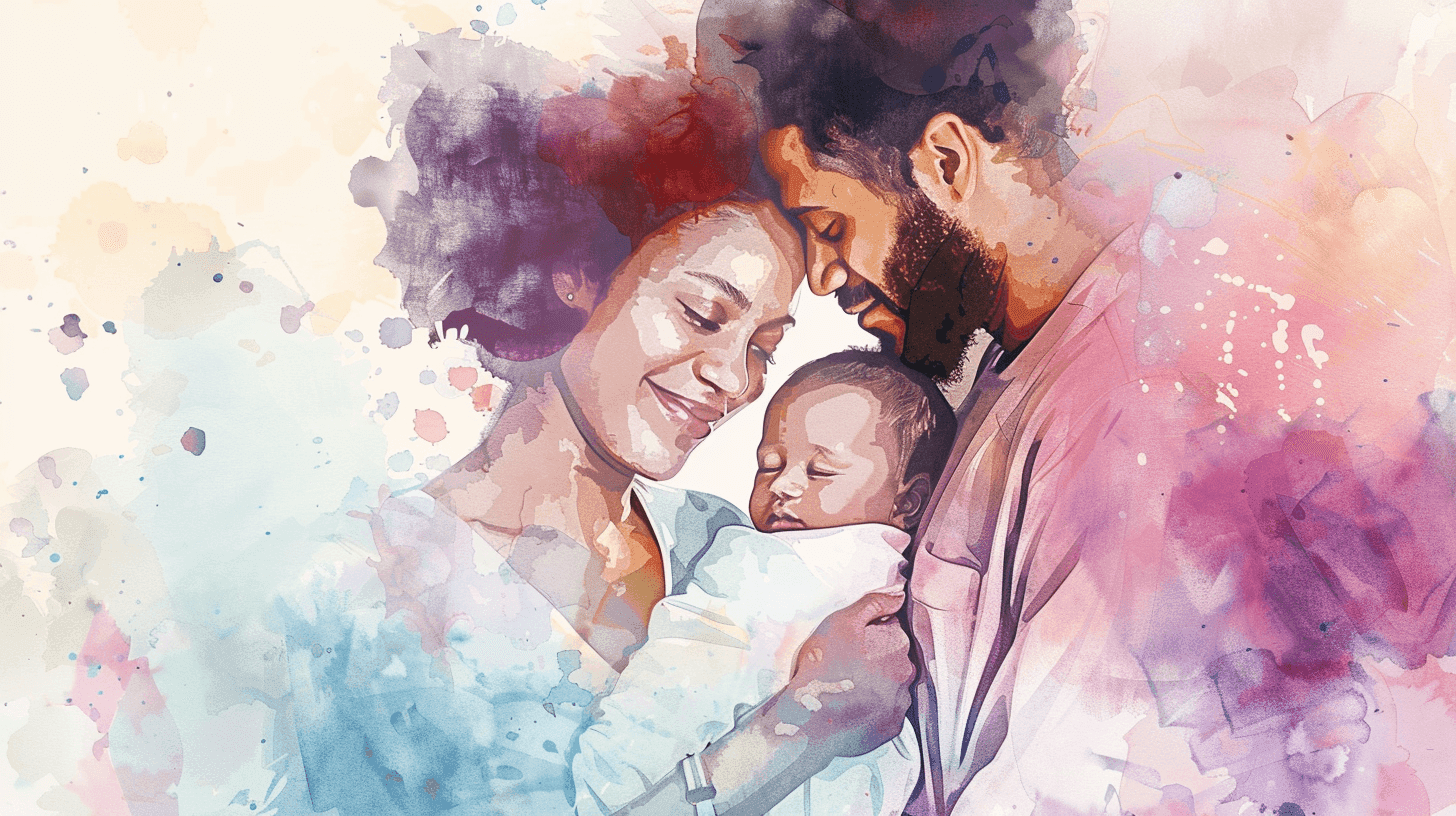

It starts as a quiet tug. A wondering. A whisper in the back of your mind: What if we had one more? Maybe it's the weight of your toddler falling asleep on your chest. Maybe it's seeing a newborn at the grocery store and feeling your whole body ache. Maybe your first baby is growing up faster than you expected, and something in you isn't ready to let go of that season yet.
Whatever the reason, now you're left holding something heavy and hard to talk about: You want another baby, and your partner doesn't.
You're Not Alone in This Struggle
As a therapist who works closely with moms in the messy middle of motherhood, I can tell you: This is more common than you think. Disagreements about family size are one of the most emotionally charged conversations a couple can face, and yet so many parents feel completely alone in it.
Real-Life Scenario: Sarah's Story
Every time I see my daughter with her friends who have younger siblings, I feel this ache. Like our family picture is missing someone. But when I brought it up to my husband, he shut down completely.
Sarah isn't unusual. Many parents find themselves in this exact position, one person longing for more while the other feels certain they're done.
The Emotional Journey You're On
This experience tends to unfold in stages, and each one carries its own weight:
- The Longing -- That persistent feeling that your family isn't complete yet
- The Conversation -- Finally bringing it up, only to hear "no"
- The Disconnect -- Feeling isolated, resentful, or misunderstood
If you recognize yourself in any of these stages, keep reading. There are ways to move through this that honor both you and your relationship.
Name the Deeper Need Behind the Baby
Before you can have a productive conversation with your partner, it helps to understand what's really driving the desire. Sometimes the longing for another baby is about more than the baby itself.
Reflection Exercise: The "Why" Behind the Want
Ask yourself:
- What does having another baby represent to me?
- Am I longing for the baby stage itself, or for something that stage gave me (purpose, connection, identity)?
- Is there a part of my life that feels empty or incomplete right now?
- What would another child change about how I see myself or my family?
- Am I afraid of something ending, like my role as a "new mom" or the closeness I felt during that time?
There are no wrong answers here. The goal isn't to talk yourself out of wanting another child. It's to understand the full picture of what you're feeling so you can communicate it more clearly.
What This Sounds Like in Real Conversation
Before: Surface-Level
"I want another baby. Why don't you?"
This frames the conversation as a debate with a winner and a loser.
After: Deeper Understanding
"I've been sitting with this feeling, and I think part of it is that I'm not ready to close this chapter. Being a mom to a little one gave me something I didn't know I needed. I want to talk about what that means for us."
This invites curiosity instead of defensiveness.
Honor the Grief on Both Sides
Whether you ultimately have another baby or not, there is grief woven into this experience. And that grief deserves space, not judgment.
Your Grief Might Look Like:
- Sadness when you see pregnant women or newborns
- Feeling like a door is closing that you're not ready to close
- Resentment when your partner seems unbothered
- Longing that catches you off guard
- Fear that you'll regret this decision forever
Your Partner's Grief Might Look Like:
- Fear of losing themselves or the life they've built
- Worry about money, mental health, or capacity
- Guilt for not feeling the same way you do
- Pressure to say yes to make you happy
- Sadness about disappointing you
Both of these experiences are real. Both deserve compassion.
A Phrase That Opens the Door
I'm not trying to convince you right now. I just want to share what's coming up for me, and hear what's coming up for you too.
This kind of language removes the pressure of a yes-or-no outcome and creates space for honest sharing.
Real-Life Scenario: The Turning Point
We were stuck in this loop where I felt unheard and he felt pressured. Then in therapy, we both just... cried. I cried about the baby I was grieving. He cried about feeling like he was failing me. That's when we realized we weren't on opposite teams; we were both just scared and sad.
Ask the Bigger Questions, Together
Once you've both had space to share what's underneath the surface, it's time to explore the bigger picture together. These aren't questions to answer in one sitting. They're conversation starters to return to over time.
Questions to Explore Together:
- What does our family look like in five years? In ten?
- What are our biggest fears about having another child? About not having one?
- What would we need to have in place (financially, emotionally, logistically) to feel good about either path?
- How do we make sure this decision doesn't become a source of resentment?
- What does "enough" look like for each of us, and where do those visions overlap?
The goal isn't to reach a decision right away. It's to make sure both of you feel seen, heard, and respected throughout the process.
Reframe the Goal: From "Baby" to "Bond"
When this conversation becomes a tug-of-war, both partners lose. The most powerful shift you can make is moving from "How do I get my partner to agree?" to "How do we protect our relationship while we figure this out?"
Conversation Framework: Shifting from Adversaries to Allies
Old Approach
- "You never listen to what I want."
- "You're being selfish."
- "If you loved me, you'd want this too."
New Approach
- "I want us to understand each other, even if we don't agree yet."
- "I know this is hard for both of us. Can we talk about what's making it hard?"
- "I love our family the way it is. I'm also holding this longing, and I need you to know that."
The new approach keeps the relationship at the center. It acknowledges the pain without weaponizing it.
Decide Who You Want to Be, Either Way
No matter how this decision unfolds, you get to choose who you want to be on the other side of it.
If You Move Forward Without Another Baby:
- Allow yourself to grieve the future you imagined
- Explore other ways to nurture and create
- Reconnect with parts of yourself beyond motherhood
- Invest in your relationship in new ways
If Your Partner Comes Around:
- Make sure it's a true "yes," not a pressured one
- Discuss what support needs to be in place
- Address fears openly and honestly
- Create a plan that honors both your needs
Self-Compassion Practices for This Season
Permission to Feel -- Your sadness is valid. Your longing is real. You don't need to minimize it or "get over it" on anyone else's timeline.
Space to Process -- Journal, talk to a therapist, confide in trusted friends. Don't carry this alone.
Boundary with Triggers -- It's okay to mute pregnancy announcements or skip baby showers while you heal. Protect your heart.
Therapy Can Help (For You, or For Both of You)
Untangle the Emotions -- Therapy is a space to untangle all the emotions -- grief, longing, resentment, confusion -- without judgment. It can help you make sense of what you're really hoping for, and why this desire feels so big.
Navigate Hard Conversations -- Having a therapist help support you in having hard conversations with your partner can help prevent resentments from building and keep your relationship from drifting apart.
Move Forward Together -- Therapy can support you both in moving forward together, even if you're not on the same page (yet). Whether that means finding new ways to connect, revisiting the conversation with more clarity, or learning how to hold different hopes with compassion.
Signs It's Time to Reach Out for Support
- The longing or grief feels overwhelming and constant
- You and your partner can't talk about it without fighting
- You're withdrawing from your partner or your family
- You're making decisions out of resentment rather than reflection
- The sadness is affecting your daily life, sleep, or mental health
Gentle Takeaway
Wanting another child when your partner doesn't is a very difficult experience. One that deserves time, reflection, and support.
You are not too much for wanting this. Your partner is not wrong for feeling differently. And your relationship can survive this, maybe even grow stronger through it, if you're both willing to stay open, stay honest, and stay kind.
You don't have to have all the answers right now. You just have to be willing to sit in the not-knowing, together.
Related Reading
- When One Hurts, Both Hurt: The Partner's Role in Postpartum Recovery
- A Partner's Guide: How to Support Postpartum Mental Health
- When Motherhood Isn’t Joyful—And That’s OK
If you're holding something heavy and hard to say—you want another baby, and your partner doesn't—that ache is real, and you're far less alone in it than it feels. Disagreements about family size are among the most emotionally loaded a couple can face, and they rarely resolve through one conversation or a pros-and-cons list. You don't have to carry the longing, or the resentment, by yourself. Therapy for mothers can help you name what's underneath it. You can book a free consult whenever you're ready.