
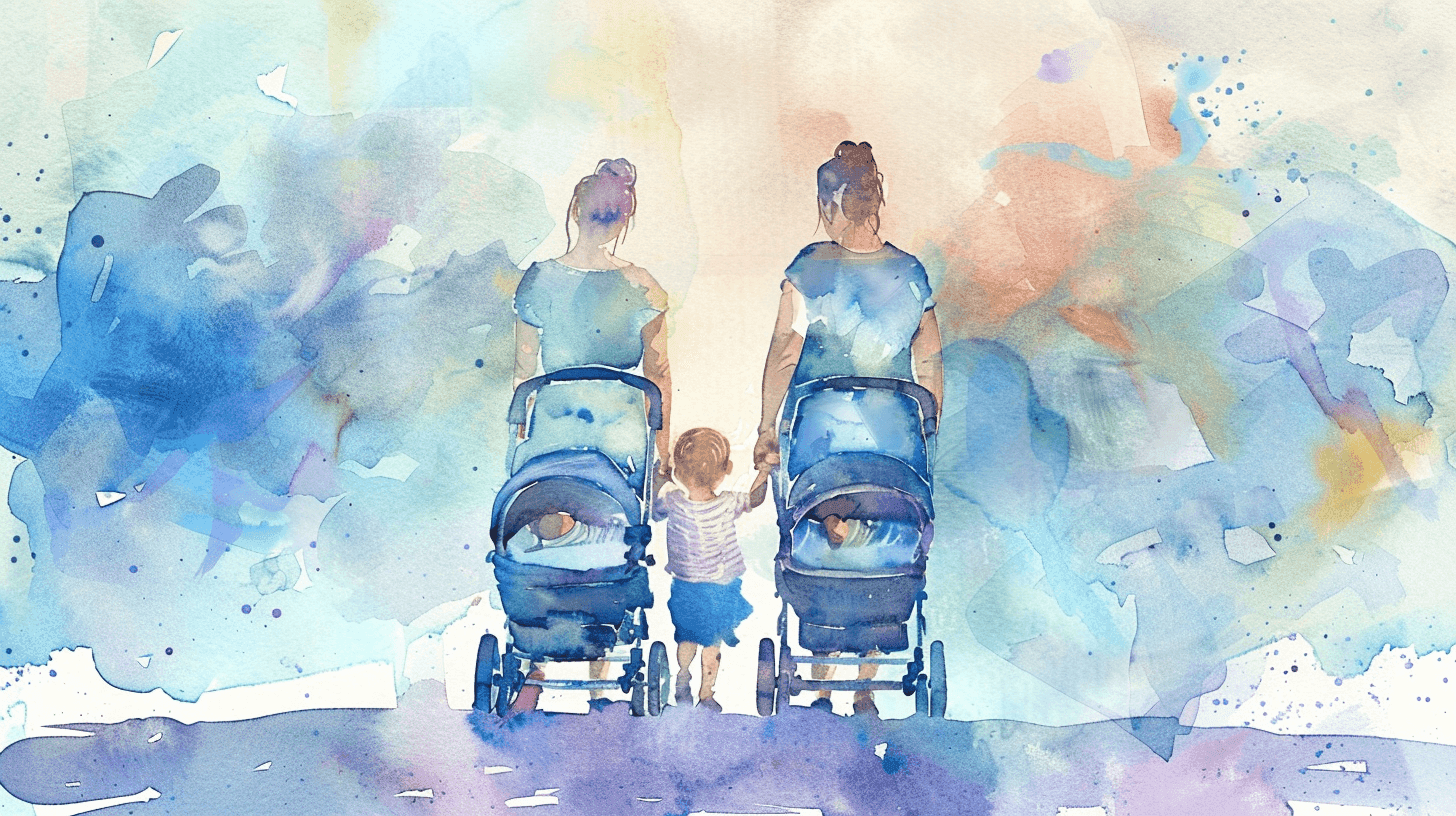
Secondary Postpartum Depression: When It Hits Harder with Baby #2, #3, or #4
"I was fine with my first baby, so why am I struggling this time?"
You sailed through your first baby relatively unscathed. Maybe you had a few tearful days, some sleepless nights, but nothing you couldn't handle. You felt capable, maybe even proud of how well you adjusted to motherhood.
But now, with baby number two, three, or four, everything feels different. Harder. Darker. You're drowning in a way you never expected, and the guilt of struggling "this time" when you were "fine before" is crushing.
If postpartum depression caught you off guard with a subsequent baby, you're not alone. Secondary postpartum depression, PPD that occurs after a second, third, or fourth baby when you didn't experience it before, affects 14-23% of mothers and comes with its own unique challenges.
What Is Secondary Postpartum Depression?
Secondary postpartum depression refers to experiencing PPD with a later baby when you didn't have it with your first (or earlier) children. It's not "baby blues round two" or just being "tired from having multiple kids"; it's a genuine mood disorder that requires recognition and treatment.
Key Characteristics of Secondary PPD:
- New onset: You didn't experience PPD with previous pregnancies
- Different context: Occurs while juggling multiple children's needs
- Often more severe: Can feel more intense than typical first-time PPD
- Delayed recognition: Often dismissed as "just being overwhelmed"
- Compounded by guilt: "I should know how to do this by now"
"The hardest part was feeling like a fraud. I told everyone I was 'an experienced mom' this time. How could I admit I was falling apart when I was supposed to know what I was doing?"
Sarah, mother of three, experienced PPD only with her third baby
Why Secondary PPD Happens: The Science Behind the Struggle
The question that haunts most mothers with secondary PPD: "Why now? What's different this time?" The answer is both biological and situational, and understanding these factors can help lift some of the shame.
1. Cumulative Sleep Deprivation
Your body may still be recovering from sleep debt accumulated during your previous pregnancies and postpartum periods. Add a new baby's nighttime needs to an older child who's waking with nightmares or needing bathroom help, and you're operating on a sleep deficit that's been building for years.
Research shows: Chronic sleep deprivation alters brain chemistry in ways that mirror depression. Mothers of multiple young children average 6+ months longer to return to baseline sleep patterns compared to first-time mothers.
2. Biological Age and Hormonal Sensitivity
Even if your subsequent pregnancy is only 2-3 years after your first, your body's hormonal response can be different. Age-related changes in neurotransmitter function, thyroid sensitivity, and cortisol regulation mean your brain may respond differently to the same hormonal fluctuations.
Additionally, each pregnancy and postpartum period creates cumulative wear on your endocrine system. Think of it like repeated sprint intervals; your body's recovery capacity may be diminished even if you felt fine after the first race.
3. The Reality Gap: Expectations vs. Reality
With your first baby, you had no baseline for comparison. Everything was new, so struggling was expected. But now you have memories of "how it went before", and when this time is harder, it creates cognitive dissonance that feeds depression.
The Comparison Trap:
- "I bonded instantly with my first. Why don't I feel that way now?"
- "I used to enjoy this. What's wrong with me?"
- "I'm an experienced mom. I should be better at this, not worse."
- "Everyone expects me to have it together this time."
4. Practical Overwhelm: The Logistics of Multiple Kids
The mental load of managing multiple children's schedules, needs, developmental stages, and emotional regulation creates a type of stress that first-time mothers don't experience. You're simultaneously:
- Recovering from childbirth while preventing toddler injuries
- Breastfeeding while managing sibling jealousy
- Responding to baby's cues while a preschooler demands attention
- Meeting developmental milestones across multiple age groups
- Navigating complex emotional dynamics (older child regression, guilt about divided attention)
5. Reduced Support and Social Isolation
The "rally the troops" support you received with your first baby? It's often absent the second (or third, or fourth) time around. Friends and family assume you "know what you're doing now" and don't need as much help. Meal trains are shorter. Visitors are fewer. The assumption is that you've got this handled.
Meanwhile, leaving the house with multiple children is exponentially harder than with one, leading to increased isolation right when you need connection most.
6. Life Circumstances and Accumulated Stress
Your life circumstances now may be more complex than with your first baby:
- Career pressures and the challenge of re-entering work with multiple children
- Financial strain from childcare costs for multiple kids
- Relationship stress (many couples experience increased tension with additional children)
- Housing constraints (outgrowing your space)
- Loss of identity and personal time that's more pronounced with multiple kids
Recognizing Secondary PPD: It Looks Different Than You'd Expect
One of the biggest barriers to getting help for secondary PPD is that it's often masked by the chaos of managing multiple children. Symptoms get dismissed as "normal overwhelm" or "just being tired."
Classic PPD Symptoms (Same as First-Time PPD):
- Persistent sadness, emptiness, or hopelessness
- Loss of interest or pleasure in activities
- Excessive guilt or feelings of worthlessness
- Difficulty bonding with the new baby
- Sleep disturbances beyond normal newborn care
- Appetite changes
- Fatigue or loss of energy
- Difficulty concentrating or making decisions
- Thoughts of harming yourself or the baby
Unique Presentations in Secondary PPD:
- Comparative rumination: Constant mental comparisons to your previous postpartum experience
- Resentment toward older children: Feeling angry at your other kids for "making this harder"
- Regret about having another baby: Intrusive thoughts like "We shouldn't have had another one"
- Grief over lost one-on-one time: Mourning the relationship you had with your first child before the new baby
- Panic about managing everything: Overwhelming anxiety about logistics and time management
- Identity crisis: Feeling like you've "lost yourself" more completely than with the first baby
- Imposter syndrome: Fear that people will discover you're "failing" when you're supposed to be experienced
⚠️ When to Seek Immediate Help:
If you're experiencing any of the following, please reach out to a mental health professional or call the Maternal Mental Health Hotline at 1-833-943-5746 (available 24/7):
- Thoughts of harming yourself or your children
- Inability to care for yourself or your children
- Severe anxiety or panic attacks
- Hallucinations or delusions
- Feeling disconnected from reality
Treatment for Secondary PPD: What Works When You Have Multiple Kids
The good news: All the treatments that work for first-time PPD also work for secondary PPD. The challenge: Accessing them while managing multiple children requires creative solutions.
Evidence-Based Treatment Options:
1. Psychotherapy (Talk Therapy)
Cognitive Behavioral Therapy (CBT) and Interpersonal Therapy (IPT) are first-line treatments with strong evidence for PPD. Therapy helps you:
- Challenge unhelpful thought patterns ("I should be better at this")
- Process grief, identity changes, and relationship shifts
- Develop coping strategies specific to multi-child households
- Address guilt and shame unique to secondary PPD
For busy moms: Many therapists now offer telehealth sessions you can attend during naptime or after bedtime. Some practices offer childcare during in-person sessions.
2. Medication
Antidepressants, particularly SSRIs like sertraline (Zoloft) and escitalopram (Lexapro), are safe and effective for PPD, including while breastfeeding. Your healthcare provider can help you weigh:
- Safety during breastfeeding (most SSRIs have minimal transfer to breastmilk)
- Expected timeline for symptom improvement (usually 4-6 weeks)
- Potential side effects and how to manage them
- Duration of treatment (typically 6-12 months minimum)
Common concern: "I didn't need medication with my first baby, so I shouldn't need it now." Your brain chemistry is different this time. Needing medication doesn't mean you're weaker; it means your biology has changed.
3. Support Groups (Specifically for Secondary PPD)
Connecting with other mothers experiencing secondary PPD can be powerfully validating. Look for:
- Postpartum Support International (PSI) online groups
- Local mom groups that specifically address mental health
- Facebook groups for mothers with multiple children and PPD
- Austin-area perinatal mental health support groups (we can provide local referrals)
Practical Strategies for Treatment Access with Multiple Kids:
- Partner tag-team: Schedule therapy during partner's non-work hours
- Trade childcare with another mom: Watch each other's kids during therapy appointments
- Telehealth during naptime overlap: Even 30 minutes when all kids are down can be enough
- Use preschool/daycare hours: If older kids are in school, schedule during that time
- Ask family to help specifically for mental health care: People are often more willing to help when they understand it's for treatment
- Evening/weekend therapist: Some therapists offer non-traditional hours for working parents
Realistic Self-Care When You Have Multiple Kids (Not Bubble Baths)
Traditional self-care advice, "take a bath," "go for a walk," "practice meditation", can feel insulting when you can't even use the bathroom alone. Here's what actually helps:
Micro-Moments of Relief:
- 5-minute breathing in the car before going inside after errands
- Screen time guilt-free hour so you can close your eyes
- Eating something that requires two hands (not just granola bars standing at the counter)
- Saying no to one extra thing each day (playdate, volunteer request, meal planning)
- Lowering standards for one area (dinner can be cereal, house can be messy, bath can be skipped)
- Texting a friend instead of having a phone call (connection without coordination)
Ask for Specific, Concrete Help:
When people offer "let me know if you need anything," most mothers freeze. They don't know what to ask for, or they feel guilty asking. Instead, try these specific requests:
- "Can you pick up my older child from preschool on Tuesdays?"
- "I need someone to hold the baby while I shower. Can you come over Thursday at 10am?"
- "Will you order us dinner from [restaurant] and have it delivered Saturday?"
- "Can you take my toddler to the park for an hour this weekend?"
- "I need someone to grocery shop for me. Here's my list."
- "Will you come fold laundry with me so I have adult company?"
For Partners: How to Support Someone with Secondary PPD
If your partner had a smooth postpartum experience with your first child, their struggle this time might be confusing. You might be thinking, "We've done this before. Why is it so much harder now?" Understanding that secondary PPD is a real, biology-based condition (not a character flaw or lack of effort) is the first step.
What Helps (From Mothers with Secondary PPD):
- Believe her when she says it's different this time (even if it doesn't make sense to you)
- Take over bedtime for older kids so she can focus on the baby (or vice versa)
- Don't say "You're such a good mom to [older child], you'll be fine" (this dismisses her experience)
- Advocate for her to see a healthcare provider (make the appointment, arrange childcare, drive her there)
- Validate that managing multiple kids IS objectively harder (it's not all in her head)
- Take the older child(ren) out regularly so she has one-on-one time with the baby
- Handle logistics without asking her (grocery shopping, older kid's activities, scheduling appointments)
What Doesn't Help:
- ❌ "But you were fine with [first child]"
- ❌ "Other moms handle multiple kids just fine"
- ❌ "You wanted another baby, remember?"
- ❌ "Just sleep when the baby sleeps" (impossible with other kids awake)
- ❌ "It's just hormones, you'll get over it"
- ❌ "At least you know what you're doing this time"
For more partner-specific guidance, read our article: When One Hurts, Both Hurt: A Partner's Guide to Supporting Postpartum Depression
Recovery Is Possible (Even When It Feels Impossible)
Secondary PPD can feel especially hopeless because you remember what it felt like to not feel this way. You have a reference point for "normal," which makes the current darkness feel even more overwhelming.
But here's what's also true: With proper treatment, the vast majority of mothers with secondary PPD recover fully. You won't feel this way forever. The weight will lift. You will enjoy your children again. You will recognize yourself again.
"I kept waiting to feel the way I did with my first baby, like I could handle anything. Instead, I felt like I was drowning. Getting treatment for PPD the second time around was the hardest and best thing I did. It took three months, but I finally started to feel like myself again. Now I can actually enjoy both my kids."
Michelle, mother of two, recovered from secondary PPD
What Recovery Looks Like:
- Feeling moments of joy with your children (not every moment, but some)
- Having energy to engage rather than just survive
- Sleeping when you have the opportunity (not lying awake with racing thoughts)
- Feeling connected to your baby and older children
- Making decisions without overwhelming dread
- Experiencing hope about the future
- Recognizing yourself in the mirror (emotionally, not just physically)
Recovery isn't linear. You'll have good days and hard days. Some weeks will feel like progress; others will feel like setbacks. That's normal. What matters is the overall trajectory over weeks and months, not day-to-day fluctuations.
When to Reach Out for Professional Help
You don't have to wait until you're in crisis to seek help. In fact, early intervention leads to faster recovery. Consider reaching out to a perinatal mental health specialist if:
- Symptoms have persisted for more than two weeks
- You're having difficulty bonding with your new baby
- You're experiencing intrusive thoughts about harming yourself or your children
- You're unable to sleep even when given the opportunity
- You're avoiding activities or people you used to enjoy
- You're feeling rage or irritability that's frightening or out of character
- You're having panic attacks or overwhelming anxiety
- Your partner, family, or friends have expressed concern
You Don't Have to Navigate This Alone
At Bloom Psychology, we specialize in perinatal mental health and understand the unique challenges of secondary postpartum depression. Our therapists are trained in evidence-based treatments specifically for mothers managing multiple children while recovering from PPD.
We offer:
- Telehealth and in-person sessions in North Austin
- Flexible scheduling (including evening and weekend appointments)
- PMH-C certified therapists (Perinatal Mental Health Certification)
- Coordination with your OB/GYN or primary care provider
- Support for partners and families
We typically have appointments available within 1-2 weeks. Same-week consultations may be available for urgent situations.
Key Takeaways
- Secondary PPD is real and valid, not a sign of weakness or failure
- It's often more challenging than first-time PPD due to the demands of multiple children
- Specific biological and situational factors make subsequent pregnancies higher risk
- Treatment works: therapy, medication, and support all have strong evidence
- You're not alone; 14-23% of mothers experience this
- Recovery is possible and you will feel like yourself again
- Asking for help is strength, not weakness, especially when you have multiple children depending on you
Additional Resources
- Postpartum Support International: www.postpartum.net | Helpline: 1-800-944-4773
- Maternal Mental Health Hotline: 1-833-943-5746 (24/7, free, confidential)
- National Suicide Prevention Lifeline: 988 (call or text)
- 2020 Mom: www.2020mom.org (advocacy and resources)
- Bloom Psychology Resource Library: Evidence-based articles on postpartum mental health, partner support, and treatment options

Dr. Jana Rundle, Psy.D.
Clinical Psychologist | PMH-C Certified
Dr. Rundle is a licensed clinical psychologist specializing in perinatal mental health. She holds a Perinatal Mental Health Certification (PMH-C) and has extensive experience treating mothers with secondary postpartum depression, anxiety, and adjustment challenges related to expanding families. She understands the unique pressures of managing multiple children while recovering from PPD.
Medical Disclaimer: This article is for informational purposes only and does not constitute medical advice. Postpartum depression is a serious medical condition that requires professional evaluation and treatment. If you are experiencing symptoms of PPD, please consult with a qualified healthcare provider. If you are having thoughts of harming yourself or your baby, please call 988 (Suicide & Crisis Lifeline) or go to your nearest emergency room immediately.
If it's hitting harder this time, that's not a sign you've gotten worse at motherhood—second and later babies carry their own load of depletion, expectation, and far less time to recover. You don't have to grit your way through it just because you managed before. You can read more about postpartum depression treatment, or book a free 15-minute consult to talk about what feels different this time.