Why Postpartum Support Groups Work (And How to Find One)
You're sitting alone at 2 AM, scrolling through Instagram while feeding your baby. Everyone else seems to have it together. Their babies sleep. They're smiling in photos. They're wearing real clothes.
Meanwhile, you haven't showered in three days. You cried twice today over nothing. You can't remember the last time you felt like yourself. And you're convinced you're the only one struggling this much.
But here's what you don't know: At least three other mothers in your neighborhood are awake right now, feeling exactly the same way. They're also convinced they're alone. They're also wondering if something is wrong with them. They're also desperately needing support but not knowing where to find it.
This is why postpartum support groups exist, and why they work.
What Is a Postpartum Support Group?
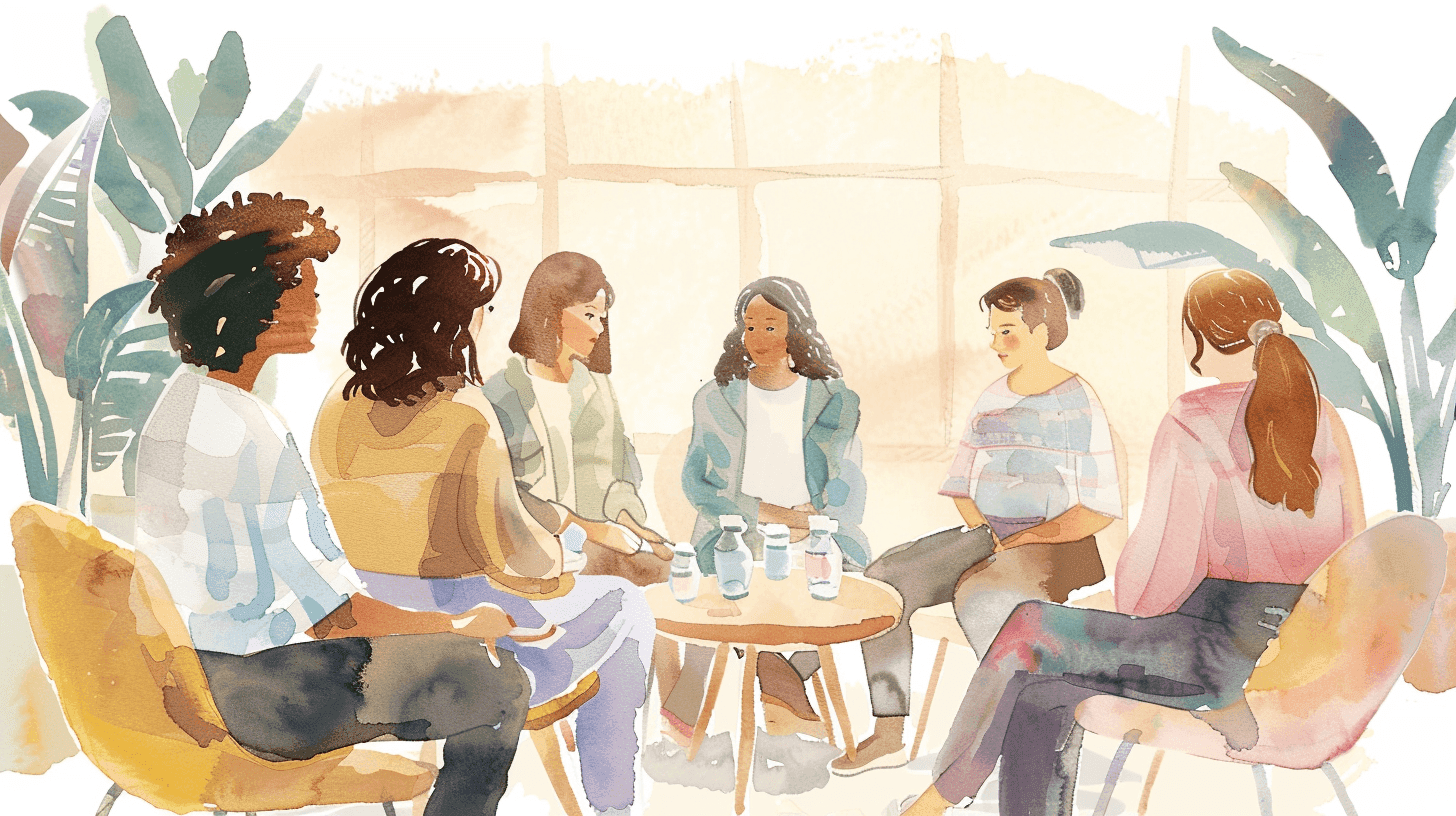
A postpartum support group is a gathering (in-person or virtual) of mothers navigating the postpartum period. These groups are specifically designed for maternal mental health support, not just general parenting advice.
What they're NOT:
"Mommy and me" classes focused on baby development
Parenting advice groups teaching sleep training or feeding schedules
Social gatherings where everyone pretends everything is perfect
What they ARE:
Safe spaces to talk honestly about the hard parts of motherhood
Places to share struggles without judgment
Opportunities to realize you're not alone
Access to validated information and resources
Communities of mothers who truly understand
Types of Support Group Formats
Peer-led: Facilitated by trained volunteers or mothers with lived experience
Professionally-led: Run by therapists, social workers, or counselors
General postpartum: Open to all new mothers
Diagnosis-specific: For PPD, PPA, PPOCD, or postpartum psychosis
Experience-specific: For birth trauma, loss, or other specific challenges
Why Postpartum Support Groups Actually Work
You might be skeptical. "How is talking to strangers going to help me?" Fair question. Here's the science and psychology behind why these groups are so effective:
1. They Break the Isolation 🌙
Postpartum depression and anxiety thrive in isolation. When you're alone with your thoughts, they spiral. You convince yourself:
"I'm the worst mother"
"Everyone else is handling this better"
"I'm fundamentally broken"
"I should be able to do this alone"
"Support groups shatter these lies. When you walk into a room (or Zoom call) and hear another mother describe your exact experience, the intrusive thoughts, the rage, the numbness, the guilt, something shifts. You realize you're not uniquely broken."
This realization alone can be profoundly healing.
2. They Normalize Your Experience ✓
In everyday life, when you admit you're struggling, people often respond with:
"Oh, I was tired too, but it gets better!"
"Have you tried sleeping when the baby sleeps?"
"At least your baby is healthy!"
"Just enjoy this time; it goes so fast!"
These responses, while well-intentioned, minimize your pain and make you feel more alone.
In a support group, when you say "I'm having thoughts about running away and never coming back," other mothers nod. They say "Me too." They share their own versions. Suddenly, your scariest thoughts feel less shameful because they're normal within the context of PPD/PPA.
3. They Provide Validated Information 📚
The internet is full of conflicting, often wrong information about postpartum mental health. Well-meaning family members offer advice based on outdated understanding.
Support groups (especially professionally-led ones) provide evidence-based information:
Accurate symptoms of PPD vs. PPA vs. baby blues
When to seek professional help
Medication safety while breastfeeding
Therapy options
Local resources
You leave knowing what's actually true vs. what's myth.
4. They Offer Practical Coping Strategies 🛠️
Therapy teaches you skills, but it's often one-on-one. Support groups are like crowdsourcing coping strategies from mothers who are currently using them.
You'll hear:
"This breathing technique helped my panic attacks"
"I sleep in shifts with my partner; here's how we do it"
"This therapist actually understands PPD"
"I asked for help this way and it worked"
You get real-world, tested strategies from people in your exact situation.
5. They Build Community and Connection 🤝
Postpartum can be profoundly lonely, especially if:
You've moved to a new city
Your friends don't have kids
Your family lives far away
You're staying home and feel isolated
Support groups create instant community. You're bonding over shared struggle, which creates deep connection quickly. Many mothers form friendships that extend beyond the group, texting each other during hard moments, meeting for coffee, supporting each other through recovery.
6. They Provide Hope 🌿
When you're in the depths of PPD or PPA, it's hard to believe you'll ever feel better. You can't imagine enjoying motherhood or feeling like yourself again.
In support groups, you meet mothers at different stages:
Some are newly diagnosed and as terrified as you
Some are a few months in and noticing improvement
Some have recovered and come back to offer hope
"Seeing mothers who were where you are, and who are now better, provides tangible hope. If they recovered, you can too."
7. They're Cost-Effective (Usually Free) 💚
Therapy can be expensive. Many postpartum support groups are completely free, offered by:
Postpartum Support International
Hospitals and birth centers
Community mental health organizations
Nonprofit maternal health organizations
This makes support accessible even if you can't afford therapy (though groups don't replace therapy for moderate-severe symptoms).
Types of Postpartum Support Groups
General Postpartum Mental Health Groups
Who they're for: Any mother struggling with postpartum mental health challenges: PPD, PPA, adjustment, overwhelm, or general stress.
Format: Open sharing, education, coping strategies, resource sharing.
Pros: Welcoming to all, diverse experiences, broader community.
Cons: Less specific guidance if you have a particular diagnosis or challenge.
Postpartum Depression-Specific Groups
Who they're for: Mothers diagnosed with or experiencing symptoms of PPD.
Format: Focused on depression symptoms: sadness, numbness, hopelessness, difficulty bonding, suicidal thoughts.
Pros: Deep understanding of depression specifically, targeted coping strategies.
Cons: May not address anxiety if that's your primary symptom.
Postpartum Anxiety Groups
Who they're for: Mothers with PPA, including panic attacks, intrusive thoughts, hypervigilance, and obsessive worry.
Format: Focus on managing racing thoughts, panic, hypervigilance, sleep anxiety.
Pros: Specific anxiety tools, understanding of intrusive thoughts, exposure to others with similar fears.
Cons: Less focus on depression if you have both.
Postpartum OCD (PPOCD) Groups
Who they're for: Mothers experiencing intrusive, unwanted thoughts about harm (to baby or self) and compulsive behaviors to reduce anxiety.
Format: Understanding intrusive thoughts are symptoms (not desires), learning ERP (Exposure and Response Prevention), reducing compulsions.
Pros: Extreme relief in learning others have identical scary thoughts, specialized strategies for OCD.
Cons: Less available (fewer groups specific to PPOCD).
Birth Trauma Support Groups
Who they're for: Mothers who experienced traumatic births: emergency C-sections, NICU stays, medical complications, feeling violated or dismissed.
Format: Processing birth experience, addressing PTSD symptoms, healing trauma.
Pros: Deep validation of birth trauma, understanding of how trauma affects postpartum.
Cons: Can be triggering to hear others' traumatic stories.
Pregnancy and Infant Loss Support Groups
Who they're for: Mothers grieving miscarriage, stillbirth, neonatal death, or infant loss.
Format: Sharing grief, honoring babies, navigating subsequent pregnancy fears.
Pros: Profound understanding of loss, space to grieve, memorial rituals.
Cons: Emotionally heavy; may need professional support alongside group.
Virtual/Online Support Groups
Who they're for: Mothers who can't attend in-person (rural areas, mobility issues, no childcare, pandemic concerns).
Format: Zoom meetings, Facebook groups, forum-based communities.
Pros: Accessible from anywhere, flexible timing, no childcare needed, anonymity.
Cons: Less personal connection, technology barriers, harder to build deep relationships.
In-Person Groups
Who they're for: Mothers who prefer face-to-face connection and can manage logistics.
Format: Meeting at hospitals, community centers, therapist offices, homes.
Pros: Deeper connection, body language and eye contact, easier to build friendships.
Cons: Requires childcare (sometimes), transportation, specific time commitment.
What Actually Happens in a Support Group?
If you've never been to one, you might be nervous about what to expect. Here's a typical structure:
Opening (10 minutes)
Welcome and introductions: Everyone shares their name, baby's age, and maybe one word describing how they're feeling.
Group guidelines: Confidentiality, no unsolicited advice, respect, non-judgment.
Optional icebreaker: Something simple to ease into sharing.
Check-In Round (15-20 minutes)
Each person briefly shares: How they've been since last meeting, what's been hard, any wins or improvements.
No cross-talk: Others listen without interrupting or giving advice (yet).
Validation: Facilitator or members affirm each person's experience.
Topic or Theme (20-30 minutes)
Many groups have a weekly theme:
Week 1: Understanding PPD/PPA symptoms
Week 2: Medication and treatment options
Week 3: Managing intrusive thoughts
Week 4: Asking for and accepting help
Week 5: Self-compassion and combating guilt
Facilitator leads discussion, shares educational content, invites members to contribute experiences and strategies.
Open Sharing and Support (15-20 minutes)
Members ask questions or share struggles.
Group offers support, validation, and strategies (not advice, but "here's what helped me").
Problem-solving together: "Has anyone else dealt with...?"
Closing (5-10 minutes)
Summary and takeaways: Facilitator highlights key themes.
Homework or self-care assignment: Optional task for the week (e.g., "Practice one grounding technique when anxious").
Closing ritual: Some groups do a centering breath, affirmation, or acknowledgment.
Total time: Usually 60-90 minutes.
Frequency: Weekly or bi-weekly, typically running for 6-8 weeks (with option to continue or join another cycle).
What to Expect Your First Time
You'll probably feel nervous. That's completely normal. You're sharing vulnerable feelings with strangers.
You don't have to talk the first time. Many groups allow "observers" to just listen until they're ready to share.
You might cry. Bring tissues. Crying is expected and welcomed.
You'll probably feel relief. Even if you don't share much, hearing others describe your experience is validating.
You might feel worse initially. Talking about hard things can stir up emotions. This usually improves after a session or two.
You're not committing forever. Try one session. If it's not a fit, you're not obligated to return.
How to Find a Postpartum Support Group
1. Postpartum Support International (PSI)
This is your best starting point.
Website: postpartum.net
Helpline: 1-800-944-4773 (call or text)
Online groups: PSI offers free weekly virtual support groups for PPD, PPA, PPOCD, survivors, fathers/partners, and more.
Local coordinators: PSI has state and local coordinators who can connect you with in-person groups in your area.
2. Hospital and Birth Center Programs
Many hospitals offer postpartum support groups, especially those with maternal mental health programs.
Call your hospital's:
Maternity ward / labor & delivery
Behavioral health department
Women's health services
Ask: "Do you offer postpartum mental health support groups?"
3. Therapists and Counseling Centers
Therapists specializing in perinatal mental health often run support groups or know of local options.
Search for:
"Perinatal mental health therapist [your city]"
"Postpartum support group [your city]"
Check Psychology Today's therapist directory and filter for "postpartum" and "group therapy"
4. Community Organizations
MOPS (Mothers of Preschoolers), recently rebranded to MomCo: Some chapters have mental health-focused groups.
La Leche League: Breastfeeding support, but often aware of local mental health resources.
Local doula collectives: Postpartum doulas often run or know of support groups.
Community mental health centers: Sliding-scale or free support groups.
5. Online Communities
If local groups aren't available:
PSI Online Support Groups (free, facilitated)
Facebook Groups: Search "postpartum depression support" or "postpartum anxiety support"
Reddit: r/NewParents r/BeyondTheBump (less structured, peer support)
Peanut App: Social network for mothers, includes support groups
6. Ask Your Healthcare Provider
Your OB/GYN, midwife, or pediatrician should have resource lists for local postpartum support.
If they don't, that's a red flag, but ask anyway. They might at least point you in the right direction.
What If You Can't Find a Group?
If you live in a rural area, don't have transportation, or can't find a group that fits your needs:
Start with virtual groups. PSI's online groups are accessible from anywhere with internet.
Consider individual therapy. Not a group, but one-on-one support with a perinatal specialist.
Join online communities. Facebook groups, Reddit, forums, less structured, but still community. Bloom Psychology has a wonderful online community of supportive moms.
Start your own group. PSI provides resources for mothers who want to start peer-led groups. You're probably not the only one in your area who needs this.
When Support Groups Aren't Enough
Support groups are powerful, but they're not a replacement for professional treatment if you need it.
Seek individual therapy and/or medication if:
Your symptoms are moderate to severe
You're having suicidal thoughts
You're unable to care for yourself or your baby
Support group attendance alone isn't reducing symptoms
You need more intensive, personalized treatment
Support groups work best when combined with therapy and/or medication for moderate-severe PPD/PPA.
Think of it this way:
Support group = community, validation, coping strategies
Therapy = personalized treatment addressing your specific thoughts and behaviors
Medication = addressing brain chemistry imbalance
You can do all three. In fact, that combination often produces the best outcomes.
What Makes a Good Support Group?
Not all groups are created equal. Here's what to look for:
Trained facilitation: Even peer-led groups should have facilitators trained in maternal mental health and group dynamics.
Clear guidelines: Confidentiality, respect, no unsolicited advice, no judgment.
Safe, inclusive environment: No racism, homophobia, or other discrimination. Welcoming to all mothers regardless of background.
Focused on mental health, not parenting advice: The goal is emotional support, not teaching sleep training or feeding methods.
Appropriate boundaries: Facilitators recognize when someone needs individual help and provide referrals.
Consistent schedule and structure: You know what to expect each session.
Red flags:
Facilitator shares excessively about their own experience
Members offer medical or psychiatric advice (should only come from professionals)
Gossip or boundary violations
Pressure to disclose more than you're comfortable with
No clear guidelines or structure
If a group doesn't feel right, try another one. Fit matters.
Real Mothers' Experiences with Support Groups
"I walked into my first support group convinced I was the only mother who'd ever felt this way. Within 10 minutes, three other mothers described my exact experience: the numbness, the scary thoughts, the guilt. I cried the entire session, but I left feeling less alone than I'd felt in months. That group saved me."
- Sarah, 32, PPD
"I was having panic attacks multiple times a day and convinced something terrible was going to happen to my baby. Hearing other mothers describe the exact same intrusive thoughts and fears, and seeing them get better, gave me hope. I learned coping strategies that therapy alone hadn't taught me."
- Maya, 28, PPA
"The intrusive thoughts were so scary I was afraid to tell anyone, including my therapist. In the PPOCD support group, I learned these thoughts were a symptom, not a reflection of who I am. That understanding changed everything."
- Jennifer, 35, PPOCD
Taking the First Step
If you're reading this and thinking "I should try a support group," here's your action plan:
Step 1: Call or text Postpartum Support International: 1-800-944-4773.
Step 2: Tell them where you live and what you're experiencing.
Step 3: They'll connect you with local or virtual groups.
Step 4: Register for one session. Just one. See how it feels.
Step 5: If it's helpful, keep going. If not, try a different group or format.
You don't have to commit to months of attendance. Just show up once and see what happens.
A Message for the Hesitant
You might be thinking:
"I'm not that bad; I don't need a support group"
"I don't want to hear other people's problems when I'm barely managing my own"
"I'm too shy to share in a group setting"
"I don't have time for this"
I get it. But consider:
"You don't have to be 'bad enough' to deserve support. If you're struggling, you deserve help. Period."
Hearing others' experiences is often validating, not burdensome. And you don't have to take on their problems. You just listen and share yours.
You don't have to share immediately. Listen first. Share when ready. No pressure.
If you don't have time to care for your mental health, your mental health will force you to make time through crisis or breakdown. An hour a week now prevents that.
You deserve support. You deserve community. You deserve to know you're not alone.
Try it. What do you have to lose?
Resources
Postpartum Support International
Helpline: 1-800-944-4773 (call or text)
Text "HELP" to 800-944-4773
Free weekly online support groups
Local coordinator network
Website: postpartum.net
Bloom Psychology
We offer:
Information about local Austin-area support groups
Facilitated postpartum support groups (call for current schedule)
Individual therapy to complement group support
Virtual therapy across Texas
In-person sessions in Austin
Schedule a free 15-minute consultation
Call us: 512-898-9510
You don't have to do this alone. Support is waiting for you.
Dr. Jana Rundle is a licensed clinical psychologist specializing in maternal mental health. She has facilitated postpartum support groups for over a decade and has witnessed the profound healing that happens when mothers realize they're not alone. She believes that community is medicine, and that every struggling mother deserves access to it.
Related Reading
- Managing Postpartum Rage: A Guide for New Moms
- Postpartum OCD: Understanding Intrusive Thoughts and Finding Relief
- The Village We Lost: How to Really Support New Mothers
If you read this convinced you're the only one awake and struggling, here's the truth your 2 a.m. brain won't let you believe: you're not, and connection is one of the most protective things you can reach for right now. Being seen by other mothers who understand isn't a luxury—it's medicine for isolation. You don't have to keep white-knuckling this alone. Our new mom program pairs that community with real clinical support, and you can book a free consult to find the right fit for where you are.